
That was my first thought as I sat next to Franklin, the driver who was kind enough to wait until two in the morning for my flight to finally arrive in El Alto, Bolivia. Sitting between us was Ely, the most hospitable woman who would house me for the next two months. In constant service to others, Ely is someone who will cook and always make sure you have everything you could need—but also someone to fear if you mess up her kitchen. She would come to be one of the people I miss the most when I leave at the end of my trip.
Driving to the house, with my eyes struggling to stay open, I tried to take in everything while also trying to comprehend the decision I had made to stay here for two months. The streets were completely empty, with no cars and no sounds other than Franklin and Ely’s foreign language entering my ears. It wouldn’t be until later in the day that I would realize Bolivia is anything but quiet.
Bolivia likes to be colorful, and it likes to be loud.
Over time, I learned to sort through all the sounds and tie meaning and purpose to each one. There was the constant honking of the minibuses and trufis crowding the wide roads, and young men yelling destinations—“¡Ceja! ¡Teleferico Amarillo! ¡Cruce Viacha!” Street vendors called out their treasures and deals, dogs barked, and metal pots clinked as oil sizzled.
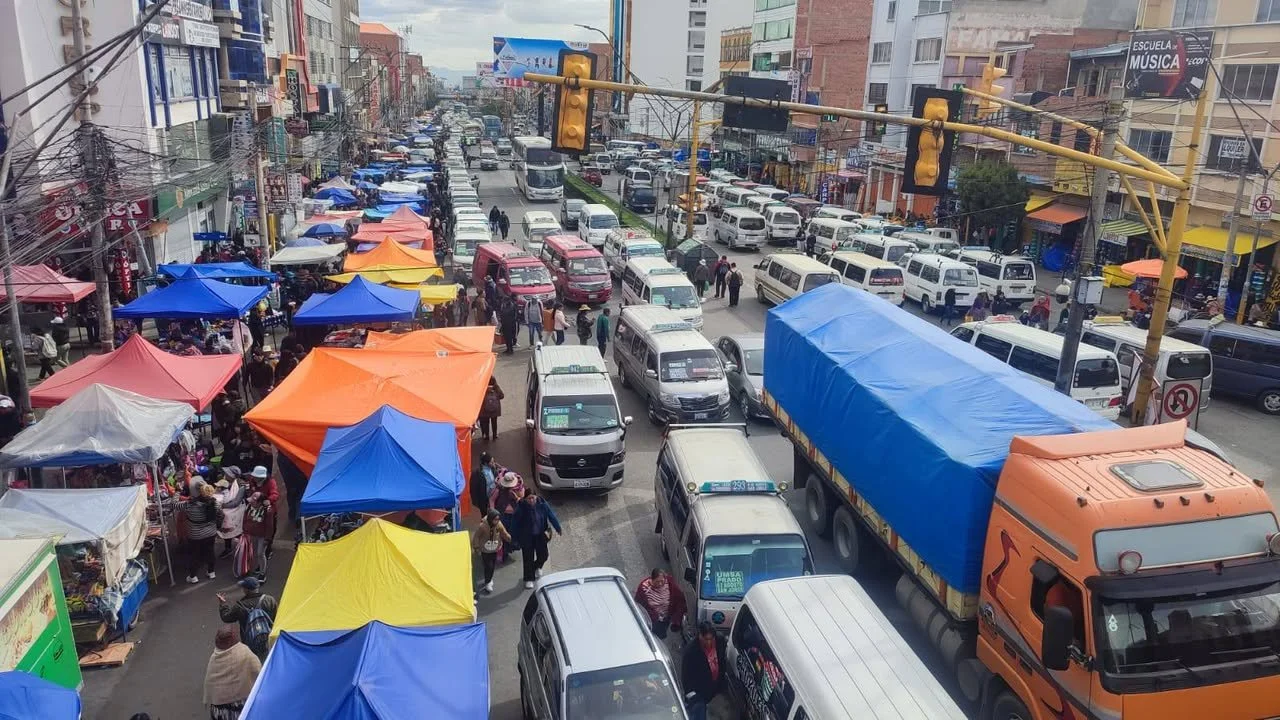
At night, loud booming music and karaoke came from the neighbors, and in the morning I woke up to a repeated loop on a megaphone advertising bread. Henri Nouwen, a Dutch Catholic priest, reflected on his gratitude for having the luxury of quiet, while others must live loudly just to survive.
Every sound here has a purpose.
When I first arrived, I made the kind of judgments every foreigner makes, despite my overambitious goal not to. “These people seem to honk just to honk,” I thought, feeling an immediate and uncontrolled annoyance. But over two months, I began to learn the secret codes behind each sound.
There were small honks to greet drivers they knew—some kind of unspoken etiquette. Urgent honks warned animals in the road. Other honks let you know there were open seats for a ride, or that a car should be moving. Sharper honks warned you that you were about to get hit by a minibus (this one might have been especially for gringas like myself). Honks even replaced four-way stops—whoever honked first went first.
The honking was a communication system, a language I had to learn.
Bolivia is a country that speaks loudly, but I found a kind of quiet that revealed itself in a different way—in the slow, intentional movement of time.
In the United States, time is money. We build drive-thrus for everything because sitting down to enjoy a meal has become impractical and inefficient. But in Bolivia, they stop time for meals.
Lunch begins with soup and moves to a plate of meat, rice, potatoes, corn, and salad, often complemented by a spicy sauce called llajua (if you can handle it). Everything stops, and everyone eats together. It builds community. It builds belonging—something that can feel unfamiliar to someone from a culture that values independence and efficiency.
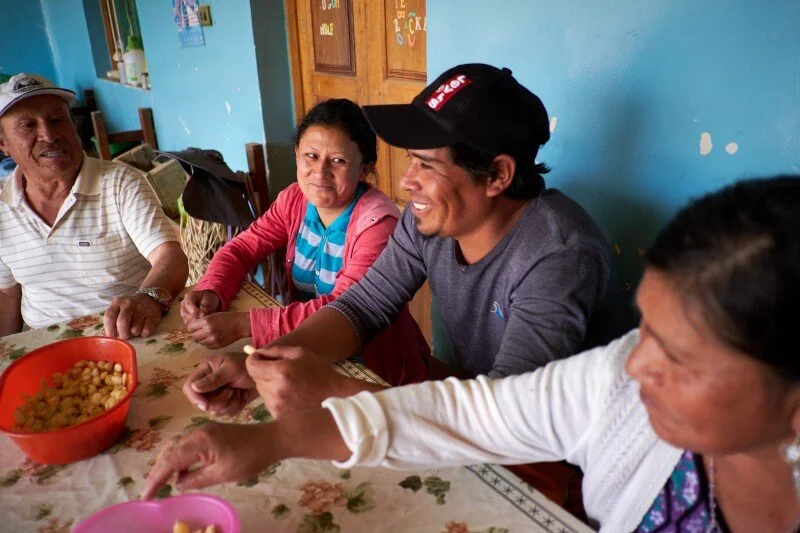
They showed me that the present matters more than the future. The foreigner tends to see the project that needs to get done, while the Bolivian sees the people the project will serve.
There is a beauty in Bolivia where the past and future share space in the cities of La Paz and El Alto. I saw modern technology serving the people—a massive urban cable car system gliding like a web in the sky above a restless mountain city.
Yet within this futuristic system, there are traces of history and tradition. Women move through the streets like living color, wearing voluminous, flowing skirts in patterns I have never seen repeated. A small tilted hat rests on their dark hair, perfectly woven into two long braids down their backs. These women, called cholitas, carry heavy bags of vegetables and fruit, sometimes with a baby strapped to their backs.
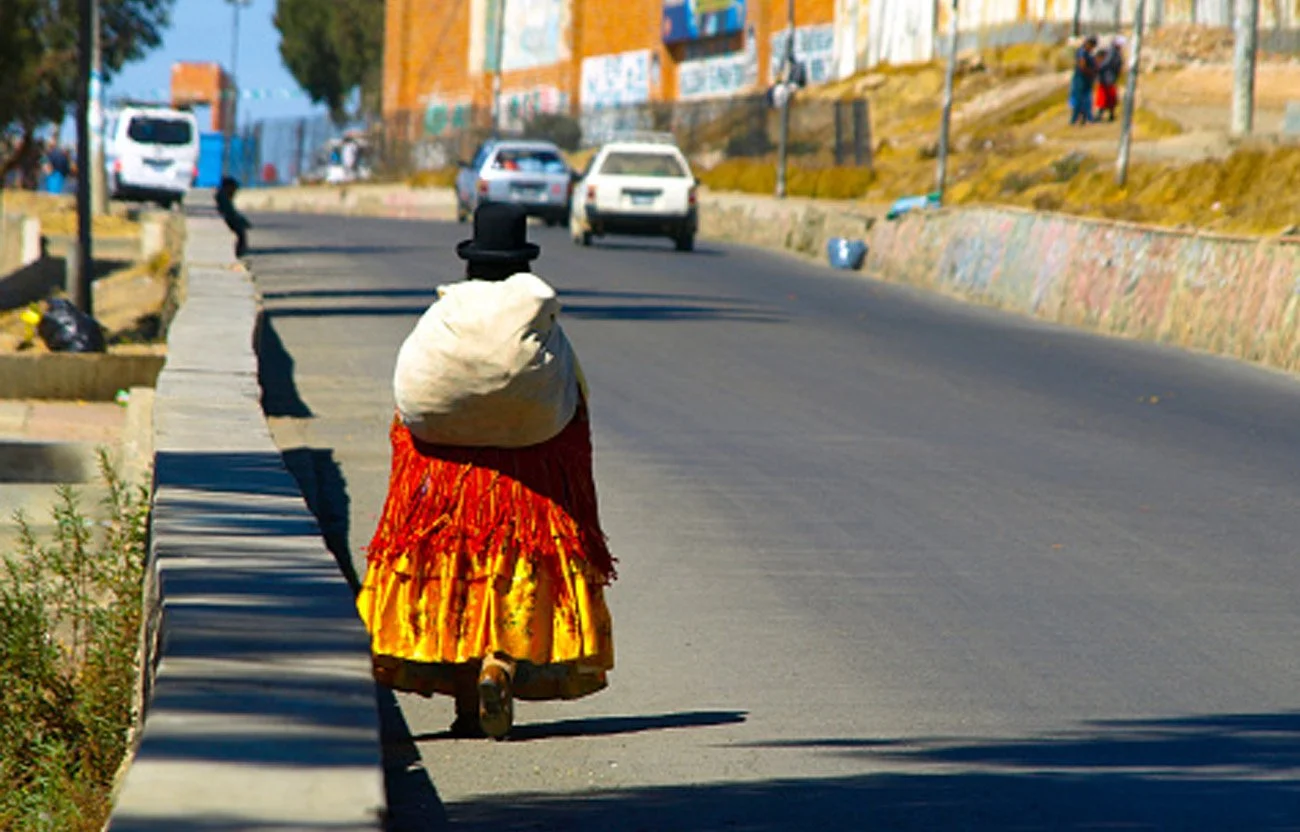
They rise before the sun and wait in harsh heat or pouring rain. They carry their goods with the hope of selling more today than yesterday. They stand out to me, and I admire their quiet confidence. They feel like a bridge—ancient roots walking through modern life.
The joy of the people was genuine, real, and pure. Children did not need much to be happy—just a hug and a friendly face that knew their name.
“Seeking the face of God in everything, everyone, all the time, and his hand in everything happening; this is what it means to be contemplative in the heart of the world. Seeing and adoring the presence of Jesus, especially in the lowly appearance of bread, and in the distressing disguise of the poor.” — Mother Teresa
I asked God to show Himself here, and I saw Him every day. In every meal, every home visit with different families, every game of volleyball, every team meeting and time of worship, every time we walked into the brothels, every lunch lesson with kids at Project Suma, every hike revealing endless waterfalls, every breeze relieving a hot day, every meal cooked for me, every visit to the marketplace.
He is there.
My days became so busy that I did not see Him—until I was shown how to slow down, to live in the present, and to notice the people and moments around me. Project Suma showed me that church can be anywhere. Worship is everywhere—you just have to stop and see it.
“Ministry is entering with our human brokenness into communion with others and speaking words of hope.” — Steve Corbett
Sometimes the reason for God’s hiddenness is that He wants to be pursued with faith and perseverance.
“When you search for me, you will find me, if you seek me with all your heart, I will let you find me.” — Jeremiah 29:13–14
-Andrea Reitz , International Intern