
From the moment I arrived at Project Suma, I understood that this was not just another place among the many options universities offer for internships and field placements.
It wasn’t a calm realization. It was intense—the kind of feeling that tells you that you are exactly where you are supposed to be, even when you do not fully understand why.
I am a final-semester Psychology student at the Catholic University of Bolivia, currently conducting my thesis research with the population served by Project Suma. But my journey is not only academic. I am also a daughter of God, and there are things that can only be understood from a different perspective: the perspective of purpose.
My story with the House of Hope began earlier as a volunteer. This year, I returned as an intern. Coming back was not a coincidence—it felt more like a confirmation.
Because here, things came together that for a long time I did not know how to hold together: my passion and training in psychology, my faith and calling toward social justice and my commitment to human rights and gender equity.
I deeply believe in the importance of social awareness because it is impossible to work with people without recognizing the realities that shape their lives. Through professions such as psychology, sociology and other related fields, we have the opportunity and the responsibility to approach those realities in a more human way. As children of God, we are called to be like Jesus.
The House of Hope became that meeting point. Not because it is a perfect place, but because it is a real one.
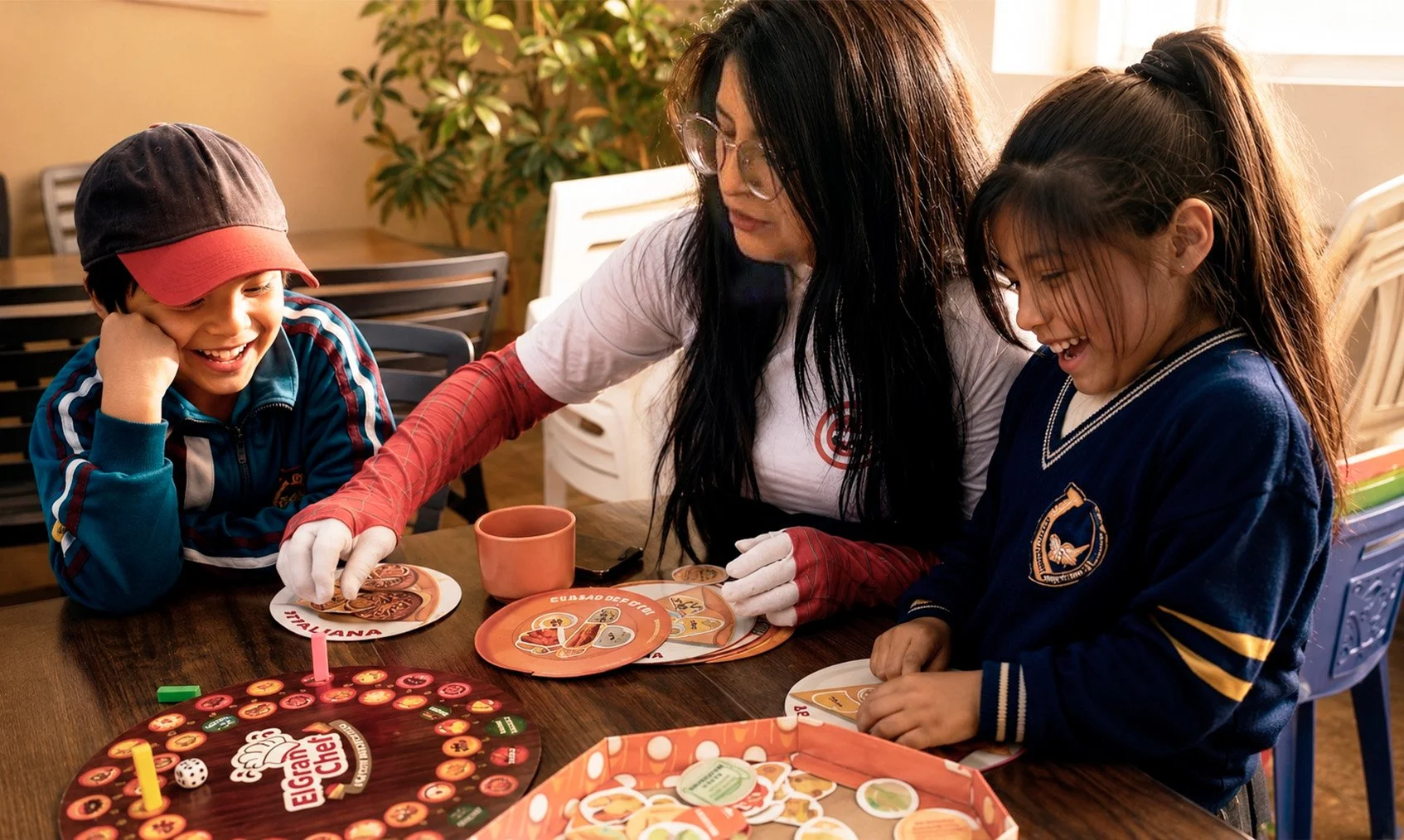
Here, there are children carrying stories that weigh heavily. There are realities that should not exist. Yet there is also a strength that dismantles every assumption. This is not just theory—it is witnessing every day how children continue to laugh, play, seek affection and build meaningful relationships despite everything they have experienced.
There are lighthearted days filled with games, laughter and shared moments. And there are other days when, during workshops about rights, prevention and protection, stories emerge that are uncomfortable, painful and deeply moving. In those moments it becomes impossible to remain unchanged. Something shifts within you. Your understanding of reality changes, especially when confronted with inequalities that are not only personal but structural.
“Speak up for those who cannot speak for themselves; ensure justice for those being crushed. Yes, speak up for the poor and helpless, and see that they get justice.” — Proverbs 31:8–9 (NLT)
One of the most difficult parts of this experience has been the emotional impact. Listening, supporting and accompanying others is not something you do without feeling. Yet it was here that I understood something important: resilience is not simply a beautiful or romanticized concept. In this place, it is something that is lived every day.
In psychology, we learn theories, techniques and methods of intervention. But here I was able to confirm that none of those things truly work without genuine presence, authentic listening and humanity.
I also reaffirmed something I deeply believe: science brings glory to God.
This experience has not only been educational—it has been transformative.
Because it is not just about what you contribute through your profession. It is also about what this work begins to stir within you. The ways it hurts, challenges, unsettles and changes you.
For many of these children, the House of Hope is a place where they can simply be children. A place where they find food, rest, play, boundaries and affection. It does not solve everything, but it does build something different in the middle of very complex realities.
Yes, there is also exhaustion. There is frustration. There are moments when you wonder whether what you are doing is enough. But even there, there is purpose.
Today, I can say with confidence that this is the right place and the right moment. Some things can only be understood in the process. And beyond any academic stage, what remains is the decision to continue being present where there is need—where Jesus has called me to be.
“God blesses those who are poor and realize their need for Him, for the Kingdom of Heaven is theirs. God blesses
-Ana Berna Luna, Children's Program Intern